If you would like to get in touch, please feel free to contact: email hidden; JavaScript is required
Browse collection
- Full collection
- 18th Century & earlier
- Ackermann
- Africa
- Alken
- Animals
- Arabasia
- Architecture/Mansions
- Art
- Australasia
- Botany
- British Isles
- Caricatures
- Children
- China
- Chromo added colour
- Chromolithographs
- Conchology
- Costume
- Cruikshank
- Culture/Lifestyle
- Dutch
- East European
- Far East
- France
- Furniture/Antiques
- General
- Germany
- Grandville
- Heraldry
- History
- History - England
- History - Europe
- Holy Land
- India
- India - sepia
- Islam
- Italy
- Japan
- Literature
- London
- Manuscript
- Map
- Military
- Monnier
- Natural history
- Pastimes
- Pochoir
- Polar regions
- Portraits
- Religious/Christian
- Religious/other
- Rowlandson
- Russia
- Science
- Scrapbook
- Sepia
- South America
- Sports/Hunting
- Stamps
- Swiss
- The Americas
- Theatre
- Travel/Scenery
- Watercolours
- World
LUGAR, Robert.
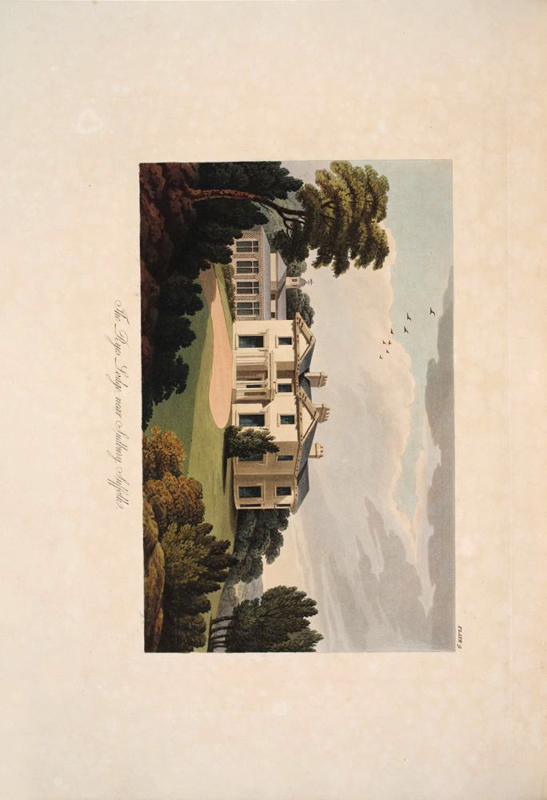
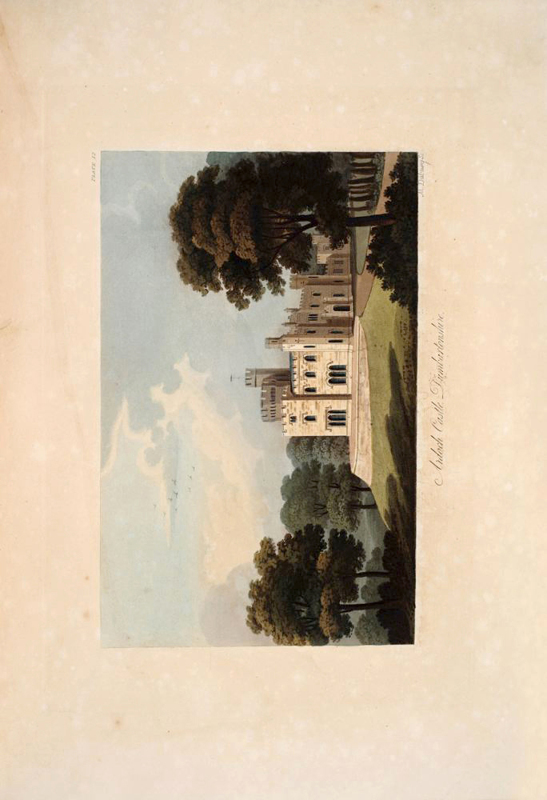
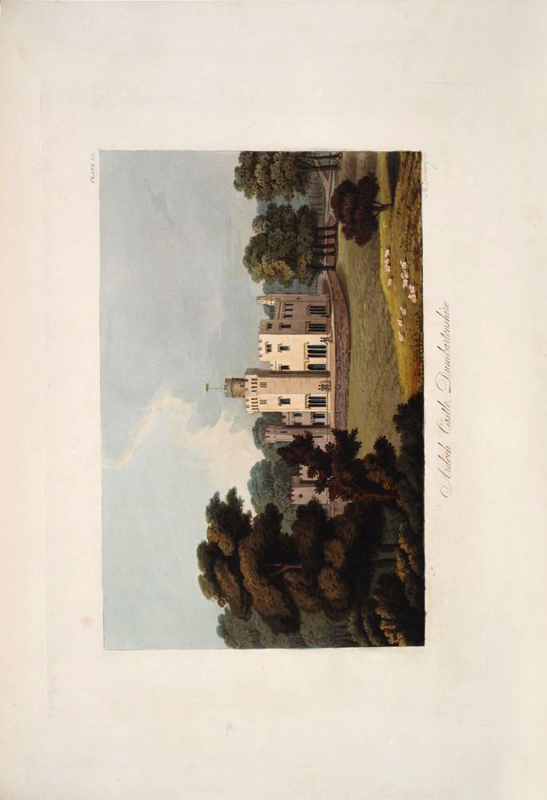
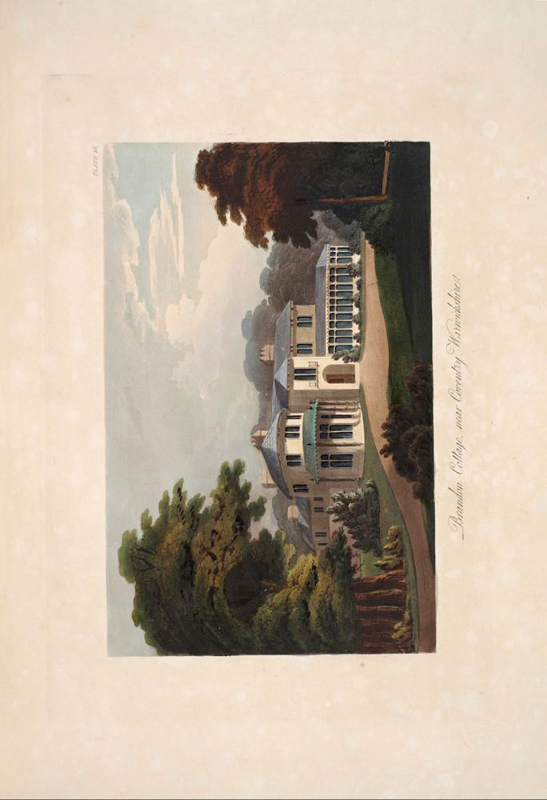
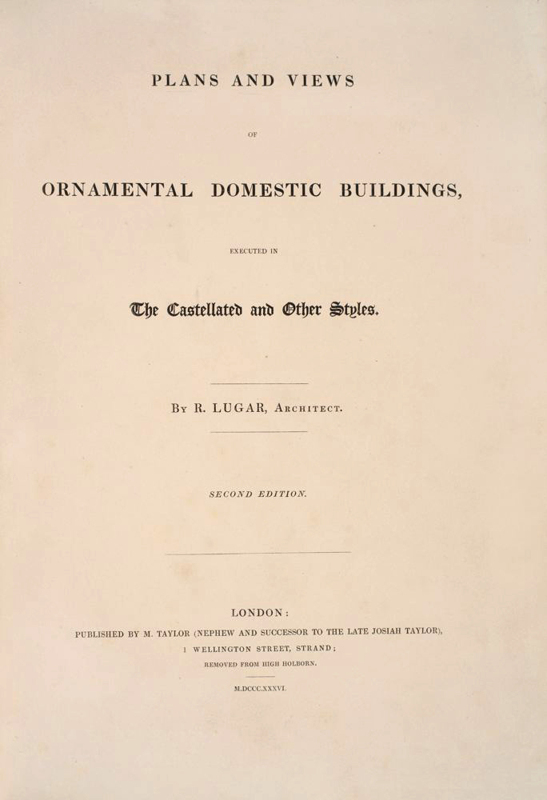
Plans and Views of Ornamental Domestic Buildings, executed in England and Scotland, in the Castellated and Other Styles [...] elegantly engraved on thirty-two plates.
“Fine quality aquatint engravings of a very elaborate set of architectural drawings” (Abbey Life). In his preface, Lugar treated several aspects of architectural design, including site, comfort, economy, and choice of style. His most important remarks are those on style, even though his discussion of the relation between landscape and the castellated style is reminiscent of Repton. “In a well-wooded country, abounding with grand and romantic [sic] scenery, a house in the castle style is peculiarly suitable, as well as in character with an extensive domain”

- Published
- London: published by M. Taylor (nephew and successor to the late Josiah Taylor), 1836.
- References
- Abbey Life 31 for first edition of 1811 only; Archer 194.3 for this edition; Bobins 872.
- Plates
- 16
- Binding/Size
- M=4to
- Value
- 0-5000
- Published
- London: published by M. Taylor (nephew and successor to the late Josiah Taylor), 1836.
- Ref
- 5085
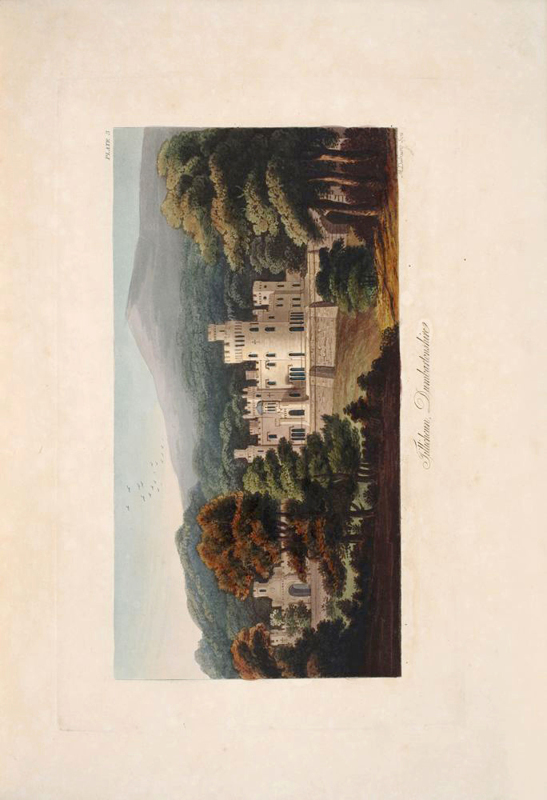
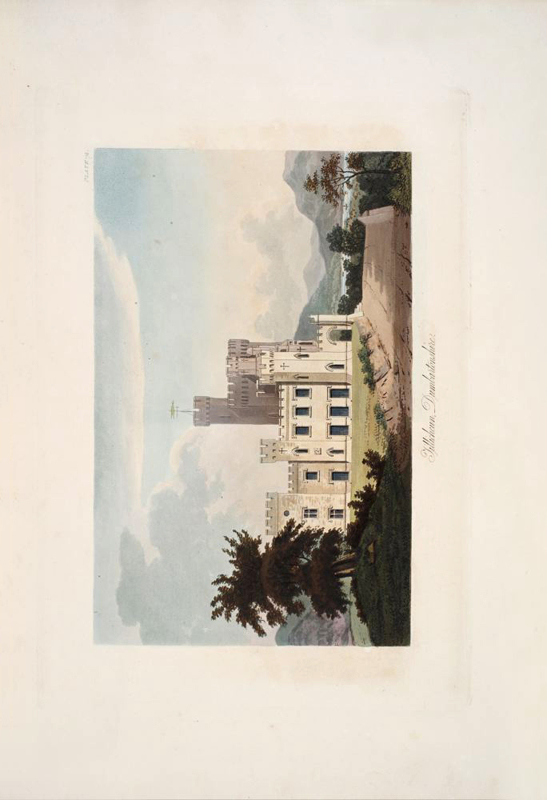
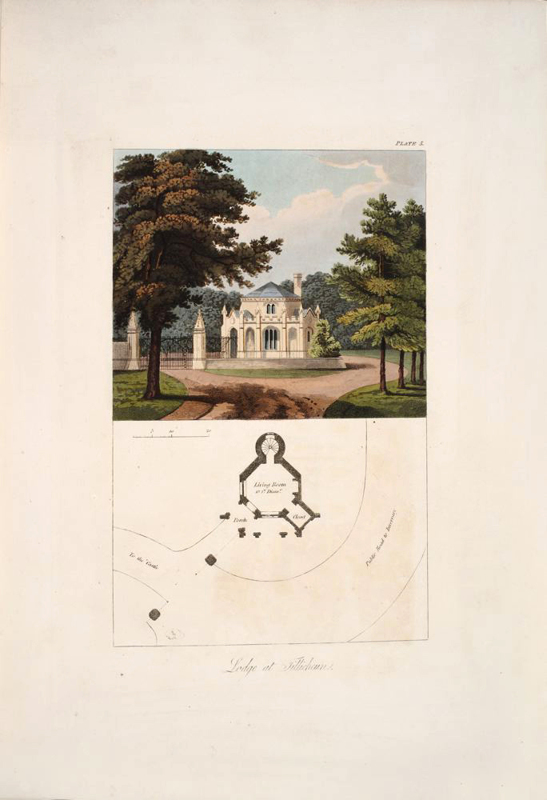
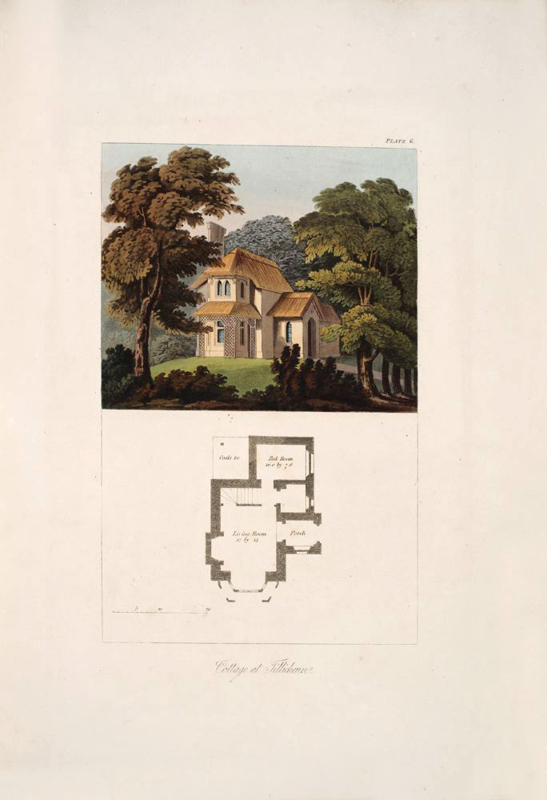
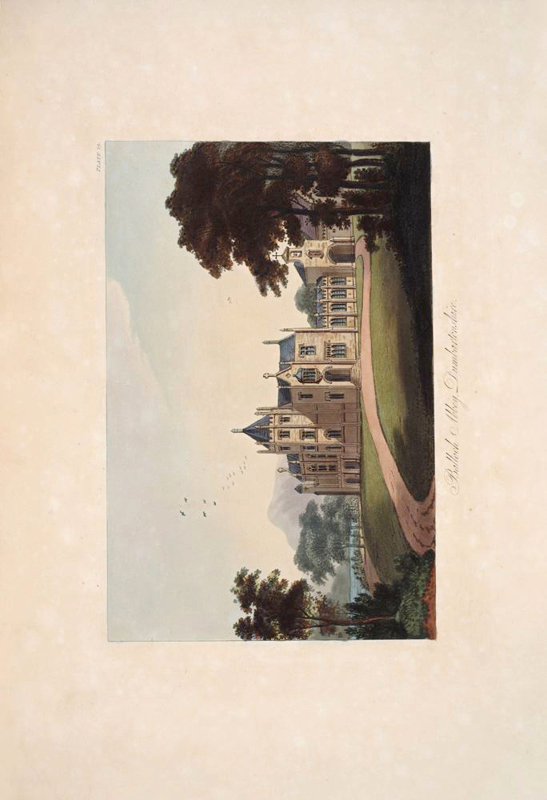
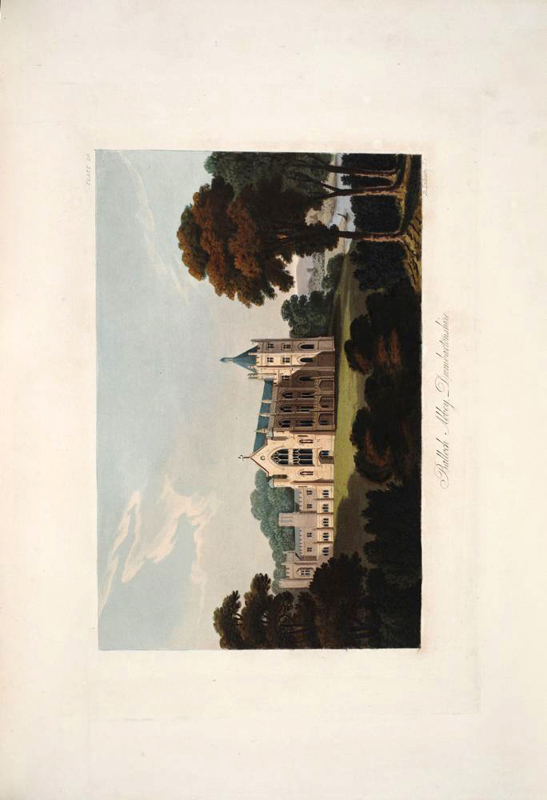
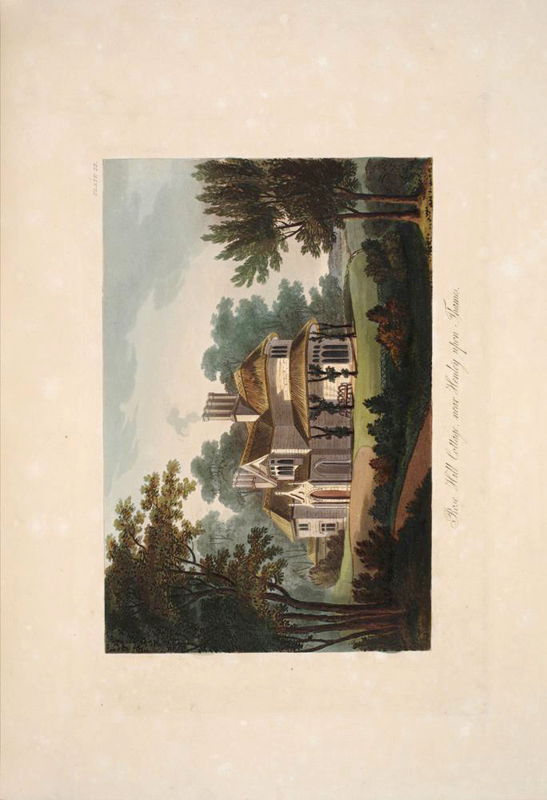
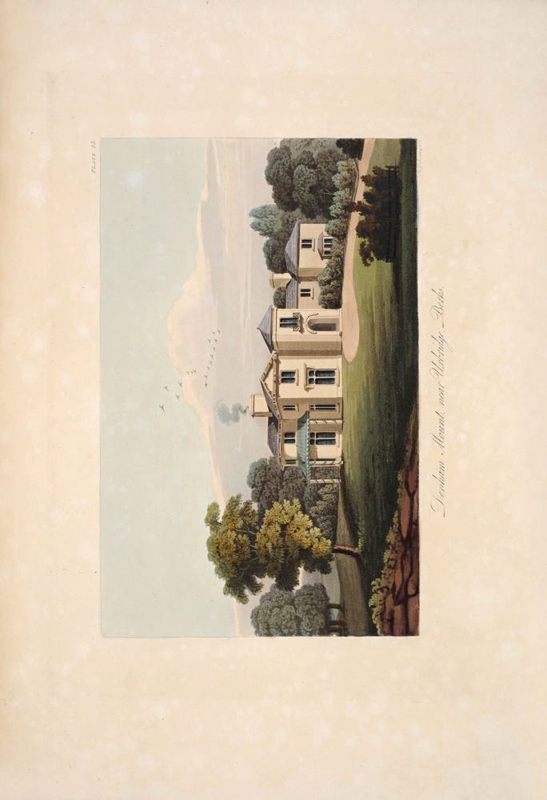
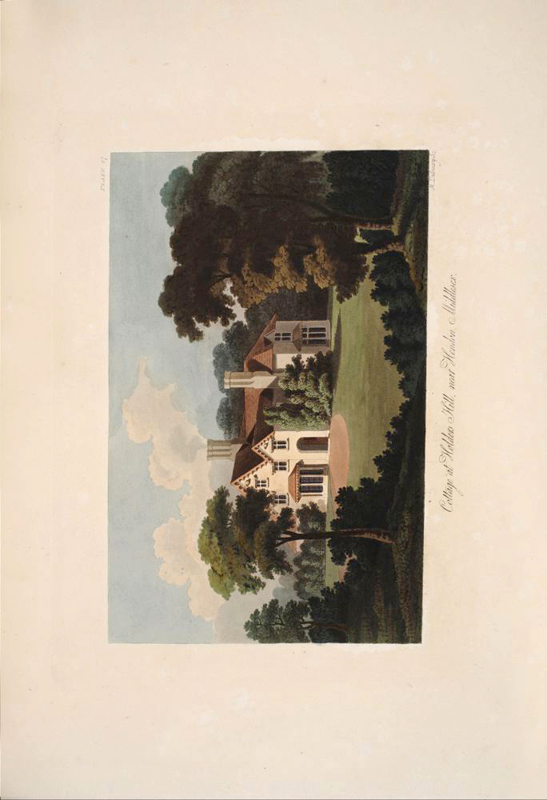
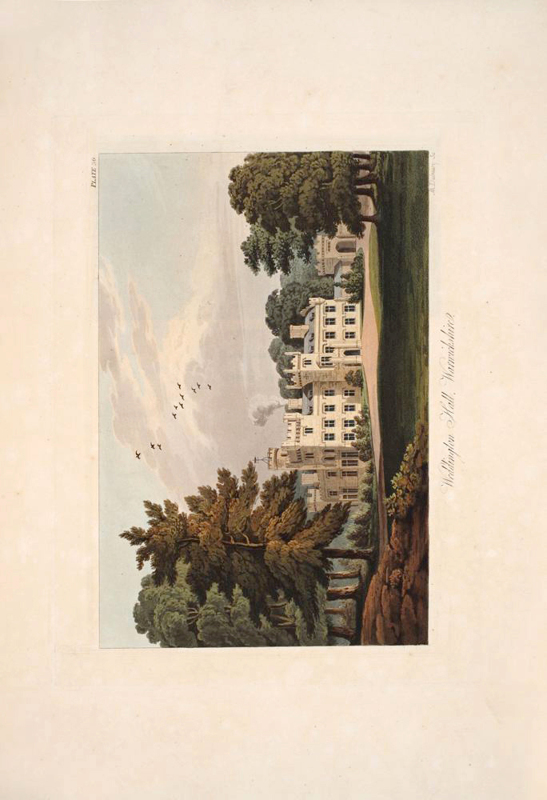
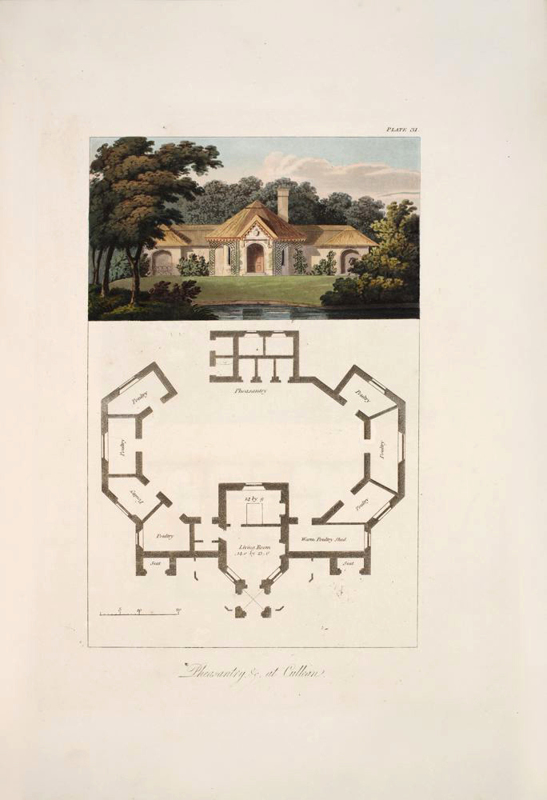
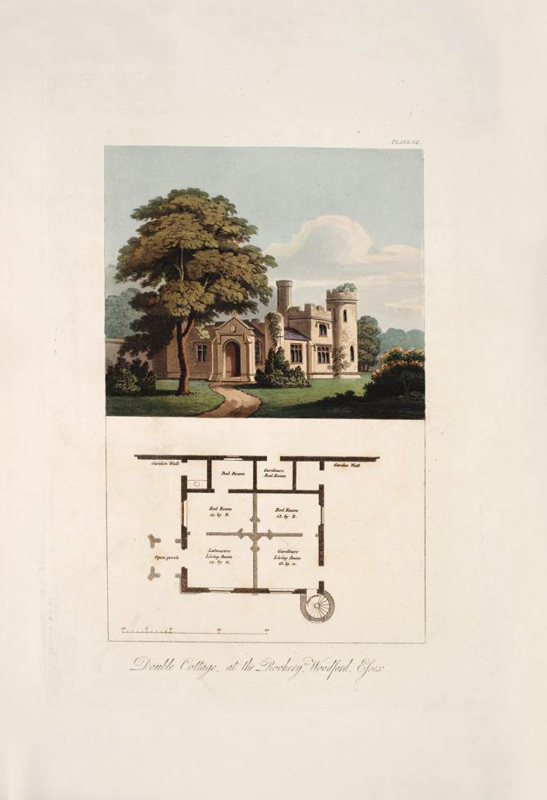
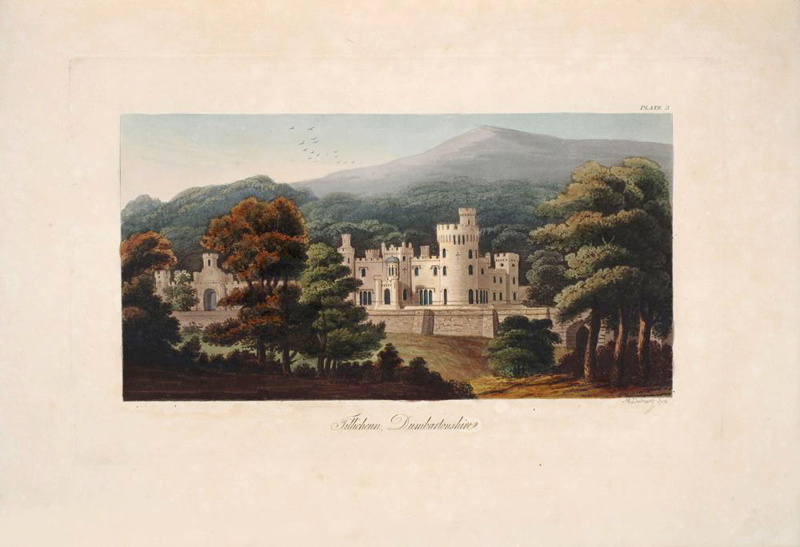
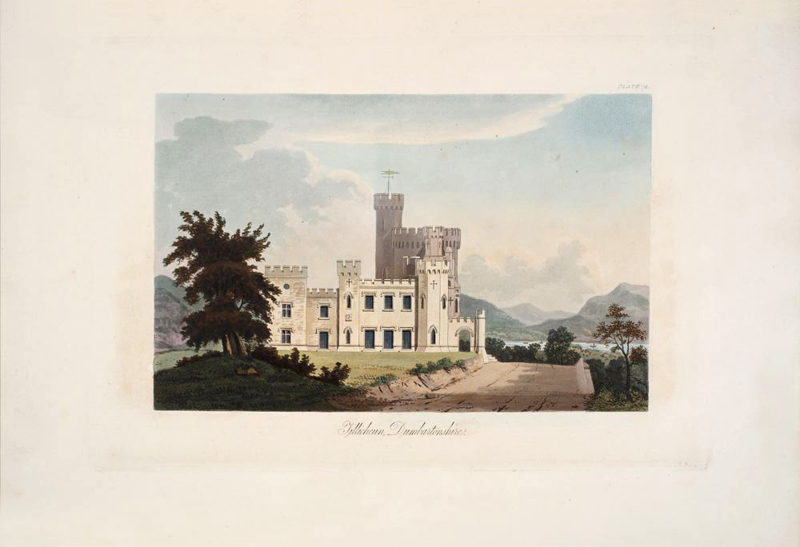
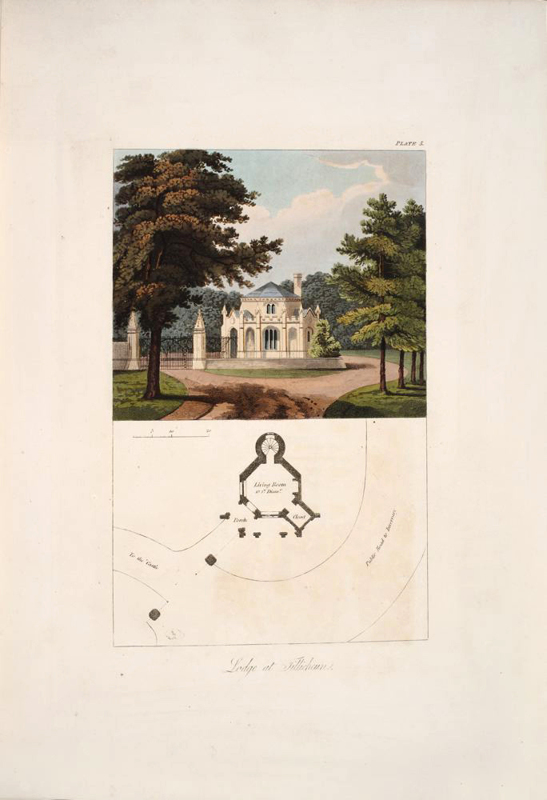
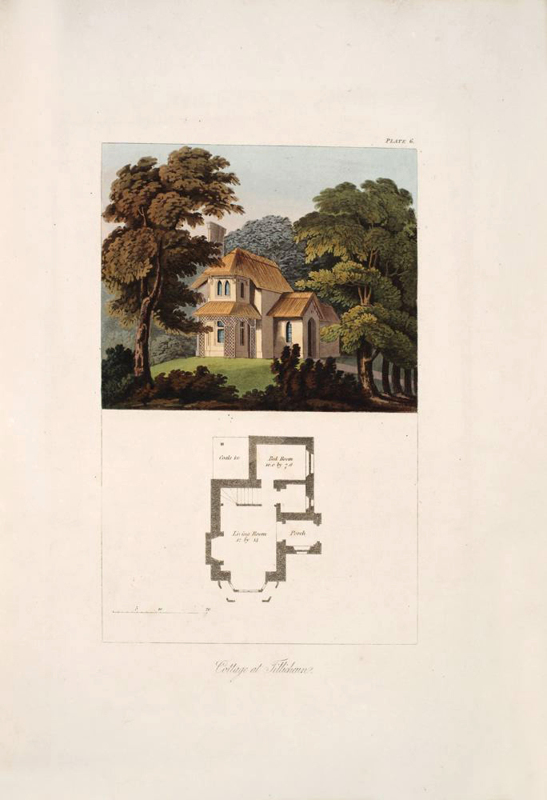
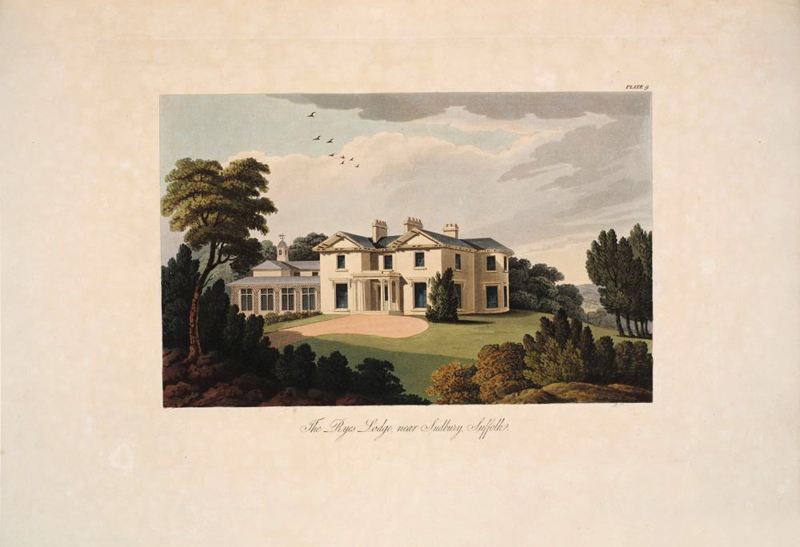
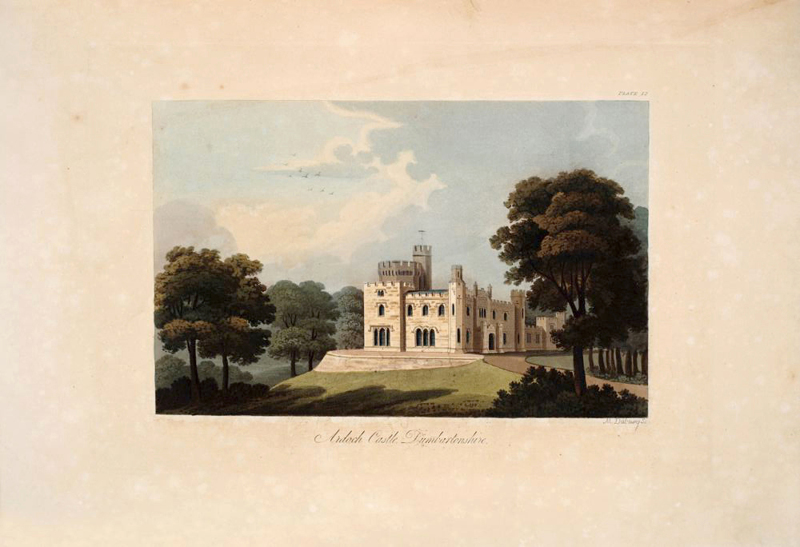
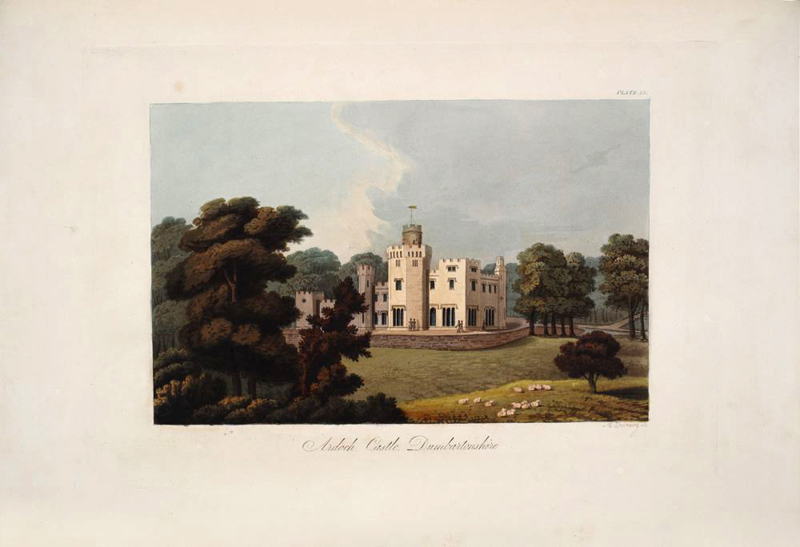
Second edition. 4to, half-title, title, dedication, preface pp. 5-12; text pp.13-28; 1 leaf “Publications by the same Author,” verso blank. pp. 1-4, folded, double column catalogue inset of Taylor’s publications at the end, 32 line-engravings, and 16 aquatints, these latter hand coloured, later half red morocco gilt over marbled boards; raised band and gilt to spine; marbled boards; extremities are worn. Lugar also noted that the castellated style could accommodate “a number of rooms, which are essential to modern habits,” and its “pleasing irregularity and play of light and shadow were highly conducive to the picturesque …” (pp.10-11). Cordier, a French engineer of bridges and roads, had engraved 37 plates from this work in France, published after his death by Salmon, without text with lithographed title under the name Cordier (Second edition, 1823 4to, 32 plates). Lugar was an innovative architect of his time. The new approach to architecture and the changing market for young architects, which followed the victory at Trafalgar in 1805, and its promise of a turn in the fortunes of the Napoleonic war, is perhaps worth mentioning, as this catalogue is well represented in this particular field and period. Perhaps encouraged by a slight rise in building activity in Britain following the depression in 1799, three architects in their mid-30s published modest but appealing works of architectural design, creating a whole new architectural genre, one of them Robert Lugar. They all offered a range of cottage and villa designs for two possible groups of potential clients: merchants and others who had reaped a wartime profit and landowners who, for agricultural or philanthropic reasons, might want to improve conditions for the labourers on their estates. It was suggested that Lugar was indebted to James Malton for some of these ideas. His designs were shown in plan and elevation (see below). Lugar argued, “The Architect no less than the Painter should feel the true value of varied lines of the contour of buildings, and he frequently should compose with a Painter’s eye. The broken line must be considered peculiarly in character for a picturesque cottage, no matter who the inhabitant.” He then referred to the effect of light and shadow made to produce those pleasing varieties which constitute the picturesque buildings. Archer points out that Malton suggested Gothic and Neoclassical styles but rejected the Grecian and Roman modes of fabrication. Coloured plates in order: 1-2. Tillicheun, Dumbartonshire. 3. Lodge at Tillicheun. 4. Cottage at Tillicheun. 5. The Ryes Lodge, near Sudbury, Suffolk. 6-7. Ardoch Castle, Dumbartonshire. 8. Brandon Cottage, near Coventry, Warwickshire. 9-10. Balloch Abbey, Dumbartonshire. 11. Rose Hill Cottage, near Henly-upon-Thames. 12. Denham Mount, near Uxbridge, Berks. 13. Cottage at Holders Hill, near Hendon, Middlesex. 14. Weddington Hall, Warwickshire. 15. Pheasantry &c, at Cullean. 16. Double Cottage, at the Rookery, Woodford, Essex.